Gameboy Tetris System is an AI system that plays Tetris (Gameboy) purely by accessing pixel buffers (reading the screen). Developed as Graduation Work for Digital Arts & Entertainment at Howest, the project includes paper and presentation documentation.
Researched Gameboy emulator mechanics, identified required pixel coordinates, and planned recognition methods for menus and gameplay states.
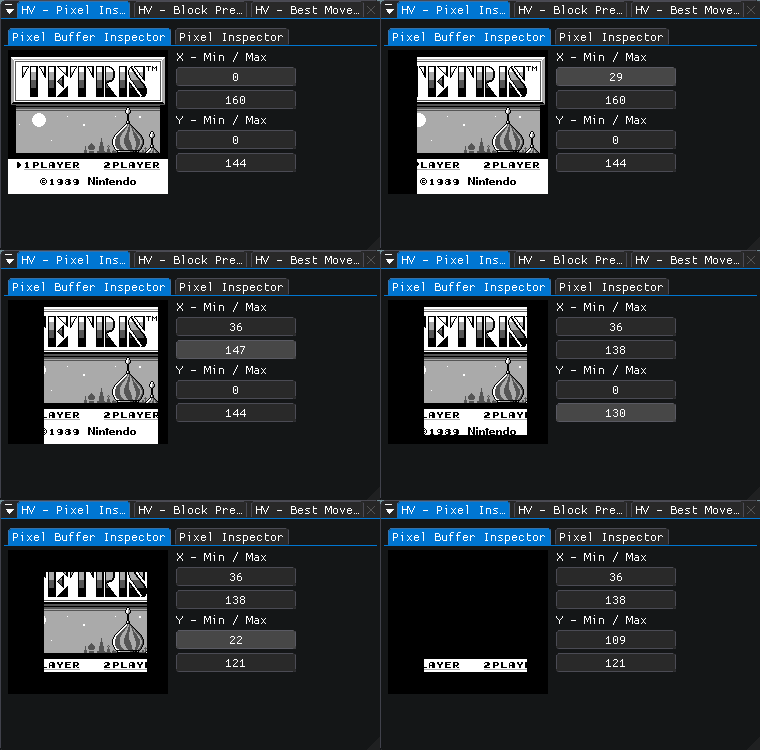
Built custom visualization tools and views to inspect incoming screen pixels and map expected code behavior in real time.
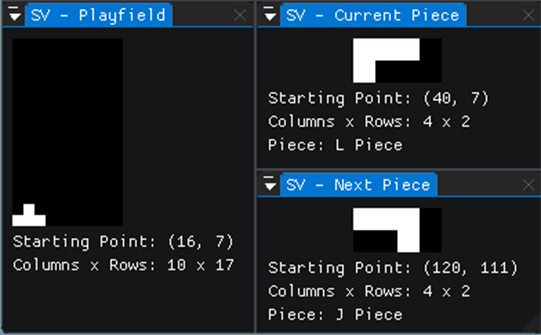
Implemented pixel checking algorithms to detect current piece positions, next piece previews, and active playfield grids.
Leveraged unique landmark pixels across screens to automatically guide the AI through Gameboy menu sequences.
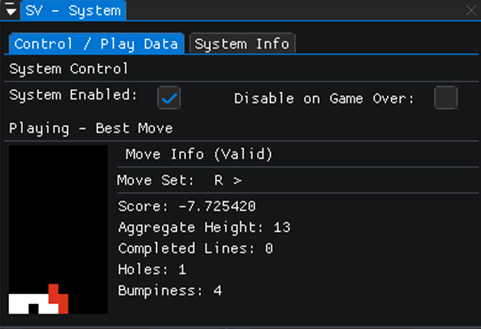
Developed scoring algorithms and moveset predictors to evaluate piece placements and execute optimal inputs.
Resolved move placement edge cases and multithreading sync issues between emulator loops and decision logic.
Debug tool allowing precise coordinate calculation and pixel sampling across specific screen regions.
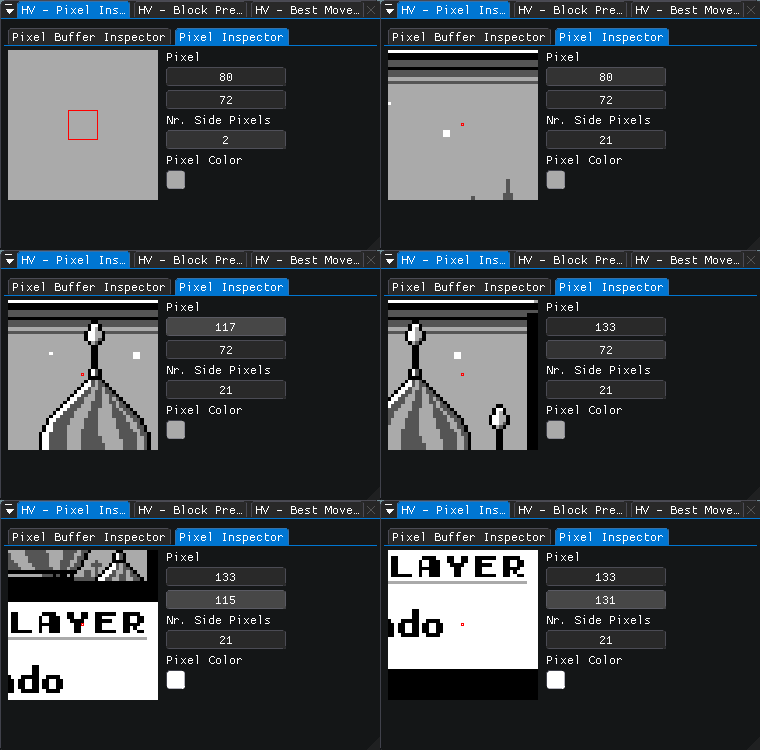
Individual pixel color inspector used to gather and verify extra state data from the emulator buffer.
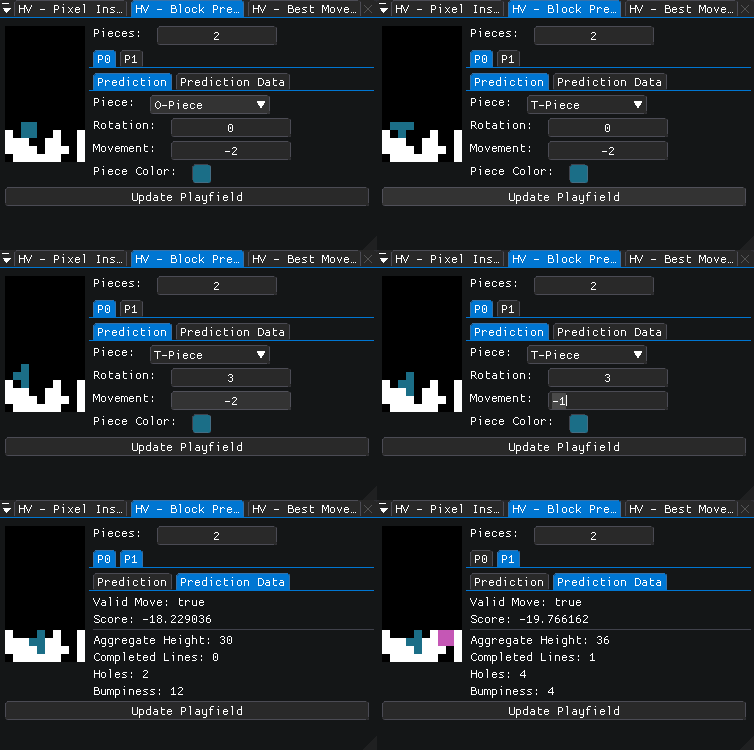
Visual debugger to test candidate moves and evaluate score calculations manually against system logic.

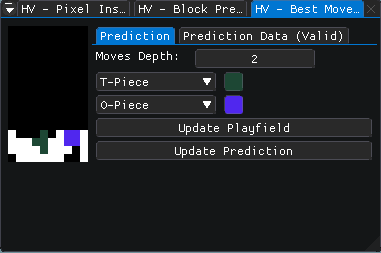
Displays optimal moves calculated by heuristic scoring for given active and upcoming piece pairs.

Core data views showing extracted playfield matrix, current active piece, and next piece queue.

Real-time status display showing active game state along with scheduled automated input sequences.